Plush Toy Quality Control & Global Compliance
At New Star Toys, we build Quality & Compliance into the manufacturing control plan from raw-material intake through final shipment. For international orders, compliance planning is aligned with applicable standards such as EN71, ASTM F963, and CPSIA, based on the product's age grade, materials, accessories, functional components, and destination market. This gives B2B buyers a controlled path from approved sample to traceable, audit-ready, and shipment-ready plush production.
- MOQ from 500 pcs
- Samples in 7–14 days
- Manufacturing since 2004
5-Stage Quality Control Across Plush Production
Our QC system controls product quality from raw-material intake to shipment release. Each batch is checked against the approved BOM, golden sample, pattern specification, color standard, construction method, and packaging requirements.
IQC
Incoming quality control on fabrics, fillings, threads, trims, and accessories.
Pre-production approval
Golden sample and specification lock.
IPQC
Cutting, embroidery, sewing, stuffing, and assembly.
Final inspection
Shape, seam integrity, filling, appearance, and accessories.
Pre-shipment control
Quantity, labeling, packaging, and carton verification.
Market-Specific Compliance Support
Toy safety requirements change by destination, so the testing plan should match where the product will actually be sold.
USA & Canada
- ASTM F963
- CPSIA
- Lead and phthalate requirements
- Tracking labels
- Product and packaging information
- Canada-specific requirements where applicable
European Union & United Kingdom
- EN71
- CE-related documentation
- UK market requirements
- Warning and care labels
- Traceability information
- Product-specific safety documentation
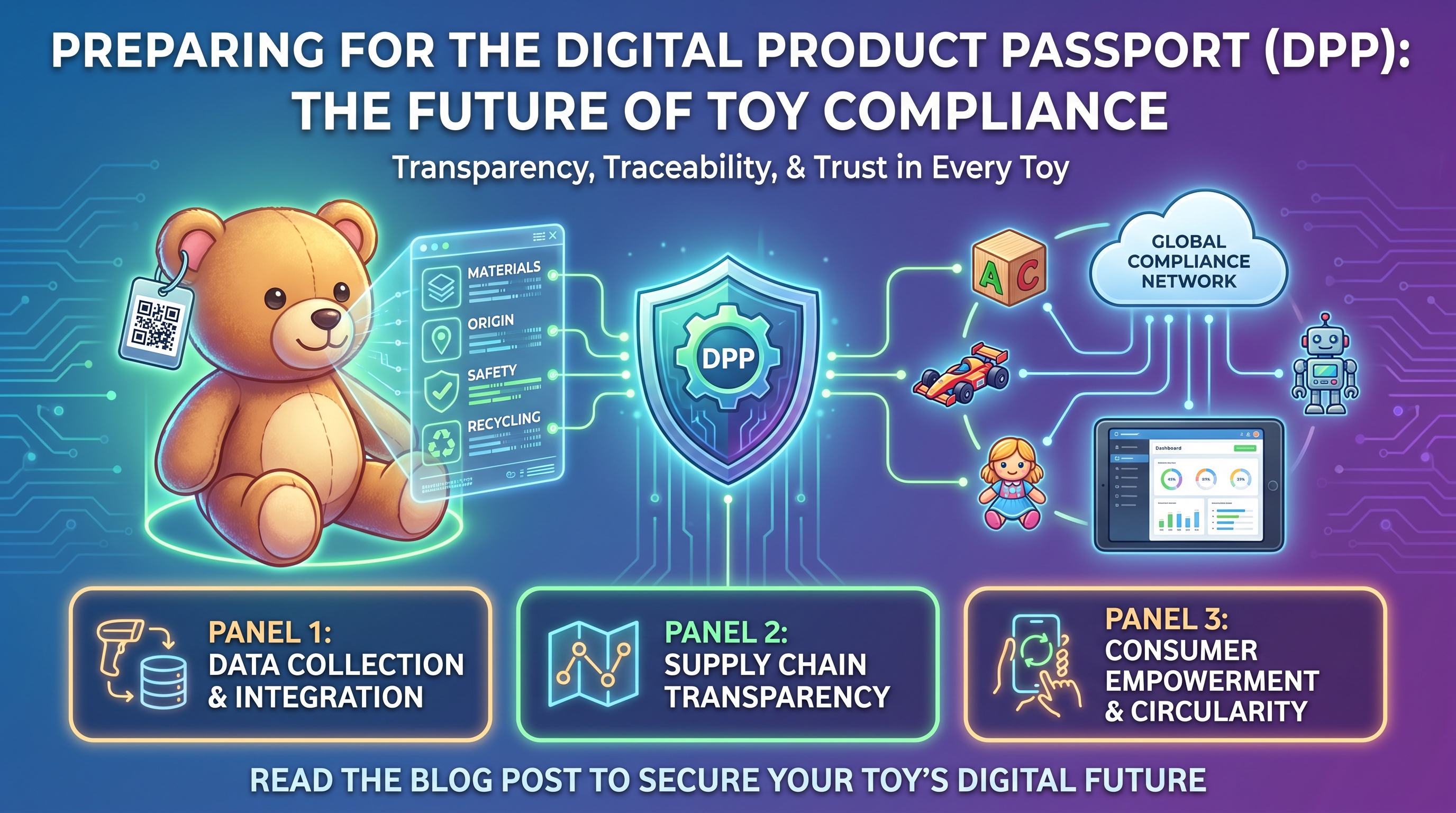
Our sourcing and documentation systems are also being developed to support increasingly strict digital traceability and product-information requirements.
Key Safety & Compliance Frameworks for Plush Toys
ASTM F963 — U.S. Toy Safety
United StatesUsed for evaluating toys sold in the U.S. Depending on the plush design, it can cover mechanical hazards, small parts, material safety, flammability, labeling, and other product-specific risks.
CPSIA & CPC — U.S. Children's Products
United StatesCPSIA addresses requirements such as lead, phthalates, tracking information, and third-party testing. Applicable children's toys generally require a Children's Product Certificate (CPC) supported by compliant test results.
EN71 — European Toy Testing
The EN71 series is commonly used to demonstrate toy safety in Europe. Key parts include EN71-1 (mechanical and physical safety), EN71-2 (flammability), and EN71-3 (migration of certain elements).
CE Conformity
European Union / EEACE marking is not a single laboratory test. It indicates that the manufacturer has completed the required conformity assessment, safety evaluation, technical documentation, and declaration process for the applicable EU requirements.
CE / UKCA
Great BritainToy products entering Great Britain may follow the applicable CE or UKCA conformity route, depending on the current regulatory framework and product documentation.
REACH Chemical Compliance
European UnionREACH controls restricted substances used in materials and components. For plush toys, this can affect textiles, dyes, coatings, plastics, printed areas, and accessories.
OEKO-TEX® STANDARD 100 — Textile Safety
A voluntary textile certification that evaluates fabrics and related materials for harmful substances. It's useful when sourcing skin-contact fabrics, threads, fillings, and textile components for children's products.
IEC 62115 — Electrical Toy Safety
Relevant when a plush contains electrical functions such as sound modules, LEDs, sensors, batteries, or interactive electronics. The standard focuses on risks associated with electrical construction and operation.
ISO 8124 — International Toy Safety
International MarketsAn international toy-safety framework covering areas such as mechanical hazards, physical properties, age-related risks, small parts, and foreseeable use.
U.S. Toy Safety Compliance: ASTM F963 & CPSIA
ASTM F963 is the main U.S. toy safety standard, while CPSIA adds requirements for children's products, including lead, phthalates, tracking labels, and certification. For plush toys, testing may cover:
- Mechanical & physical safety – small parts, sharp points, attachments
- Flammability
- Lead & phthalates
- Stuffing and material safety
- Age grading & labeling
- Electronic features, where applicable
For applicable children's toys, a CPSC-accepted laboratory must complete testing. New Star Toys can support sample preparation, third-party testing coordination, and compliance documentation.
Required for: U.S. toy market entry, CPC documentation, Amazon U.S. compliance, retailer and importer requirements. The exact test scope depends on the product design, age grade, materials, and functional features.
EU Toy Compliance: EN71 & CE Requirements
For plush toys sold in the European market, EN71 testing supports compliance with EU toy safety requirements, while CE marking confirms conformity with applicable legislation. Testing may include:
- EN71-1 – Mechanical & physical safety
- EN71-2 – Flammability
- EN71-3 – Migration of certain elements
- Material & accessory review
- Warning and care labels
- Product traceability
- Technical documentation
New Star Toys can support sample preparation, third-party testing coordination, and CE-related compliance documentation.
Required for: EU toy market entry, retailer and importer compliance, CE conformity documentation, marketplace and customs requirements. The exact test scope depends on the plush design, age grade, materials, accessories, and target EU market.
Final Pre-Shipment Inspection & Release Control
Before we release a production lot for export, we perform a final verification of the finished goods and pack-out configuration. Inspection points include:
The shipment is released only after the required inspection points are completed.
15+ Documentation & Certification Support
Our factory and products conform to the leading international toy safety and management systems:
ASTM F963 (US Toy Safety Standard)
The primary physical, mechanical, and flammability testing standard required for entering the US retail market.
CPSIA (Consumer Product Safety Improvement Act)
Ensures strict compliance with chemical safety thresholds, specifically regulating lead and phthalate limits for children's products in the US.
EN71 (European Toy Safety)
The comprehensive harmonized standard governing physical safety, flammability, and chemical migration for toys sold within the EU and UK.
CE (European Conformity)
Displays conformity with EU-wide health, safety, and environmental protection legislation.
ICTI (International Council of Toy Industries)
Verifies that our factory undergoes regular independent audits to maintain ethical manufacturing, fair labor standards, and secure working environments.
ISO 9001 (Quality Management System)
Validates our strict internal quality control procedures to ensure production run consistency from batch to batch
Product Safety Testing for Plush Toys
Safety testing is planned according to the plush toy's age grade, materials, construction, accessories, functional components, and destination market. Testing support can cover:
Production-ready samples can be prepared for third-party laboratory testing before bulk release when required.
Sustainable & Non-Toxic Material Sourcing
We also support brands that require more responsible material choices. Available sourcing directions include:
Where appropriate, materials can be sourced from suppliers aligned with standards such as GRS and OEKO-TEX, depending on the exact project requirements.
Quality Starts Before Production
The strongest compliance programs begin during design and sampling, not after mass production. By reviewing materials, accessories, age grading, functional components, and destination-market requirements early, we can reduce the risk of:
That gives buyers a clearer path from approved sample to compliant bulk production.
Chemical Safety, CPSIA & Material Compliance
Chemical safety is controlled from raw-material approval through final product verification. New Star Toys uses non-toxic dyes, organic fabric options, clean recycled fillings, and compliant components,
Raw Material & Chemical Control
- Non-toxic dyes and pigments
- Organic fabric options
- Recycled polyester and rPET fillings
- Hypoallergenic filling for suitable projects
- Supplier materials aligned with GRS and OEKO-TEX requirements where applicable
CPSIA & ASTM F963 Testing Support
- Lead content
- Phthalates
- Restricted chemical substances
- Material and coating safety
- Tracking-label requirements
- Other product-specific safety requirements
Product-Specific Compliance Planning
- Material composition
- Intended age group
- Printed or coated components
- Plastic and functional accessories
- Product construction
- Destination market
Third-Party Verification & Documentation
- Third-party laboratory test reports
- Supplier material records
- Chemical compliance results
- Material specifications
- Safety certificates
- Supporting product traceability records
There is no single chemical test package for every plush toy. This prevents unnecessary testing while ensuring the relevant regulatory requirements are covere
This creates a documented link between the approved BOM, incoming materials, production controls, laboratory testing, and final compliance file.
Compliance Scope Locked Before Mass Production
Before bulk production is released, New Star Toys defines the compliance scope for the specific SKU rather than relying on a generic factory-level certification claim. The project team aligns the buyer, product specification, and destination-market requirements before production authorization.
The pre-production compliance review can confirm:
This gives B2B buyers a clear compliance baseline before purchase-order execution, reducing ambiguity between what the factory holds, what the individual product requires, and what must be verified before market entry.
Build for Your Target Market
Send us your plush design, target country, intended age group, materials, and functional requirements. Our team can help plan the right quality checks, testing, labeling, and compliance documentation for your project.