
Audience: Wholesale buyers, retail sourcing managers, and compliance officers Reading time: ~3-4 minutes
For decades, importing plush toys into the European Union meant managing a mountain of paperwork. The cornerstone of that system was the EU Declaration of Conformity (DoC) — a physical document certifying that a product met the strict EN 71 safety standards.
That era is ending. Regulation (EU) 2025/2509 — the new EU Toy Safety Regulation — was published in the Official Journal on December 12, 2025, and entered into force on January 1, 2026. It repeals the 16-year-old Toy Safety Directive, and by August 1, 2030, every toy placed on the EU market must carry a Digital Product Passport (DPP) in place of the old paper DoC.
For B2B buyers and retail sourcing managers, understanding this shift now is the key to keeping shipments moving over the next few years. Here's exactly what the DPP means for your plush toy supply chain, and how our factory is already adapting to keep your orders on schedule.
In this article:
- What Is the Toy DPP?
- What Will the QR Code Reveal?
- Why Is the EU Making This Mandatory?
- Key Dates to Know
- How We're Staying Ahead of the Curve
What Is the Toy DPP?
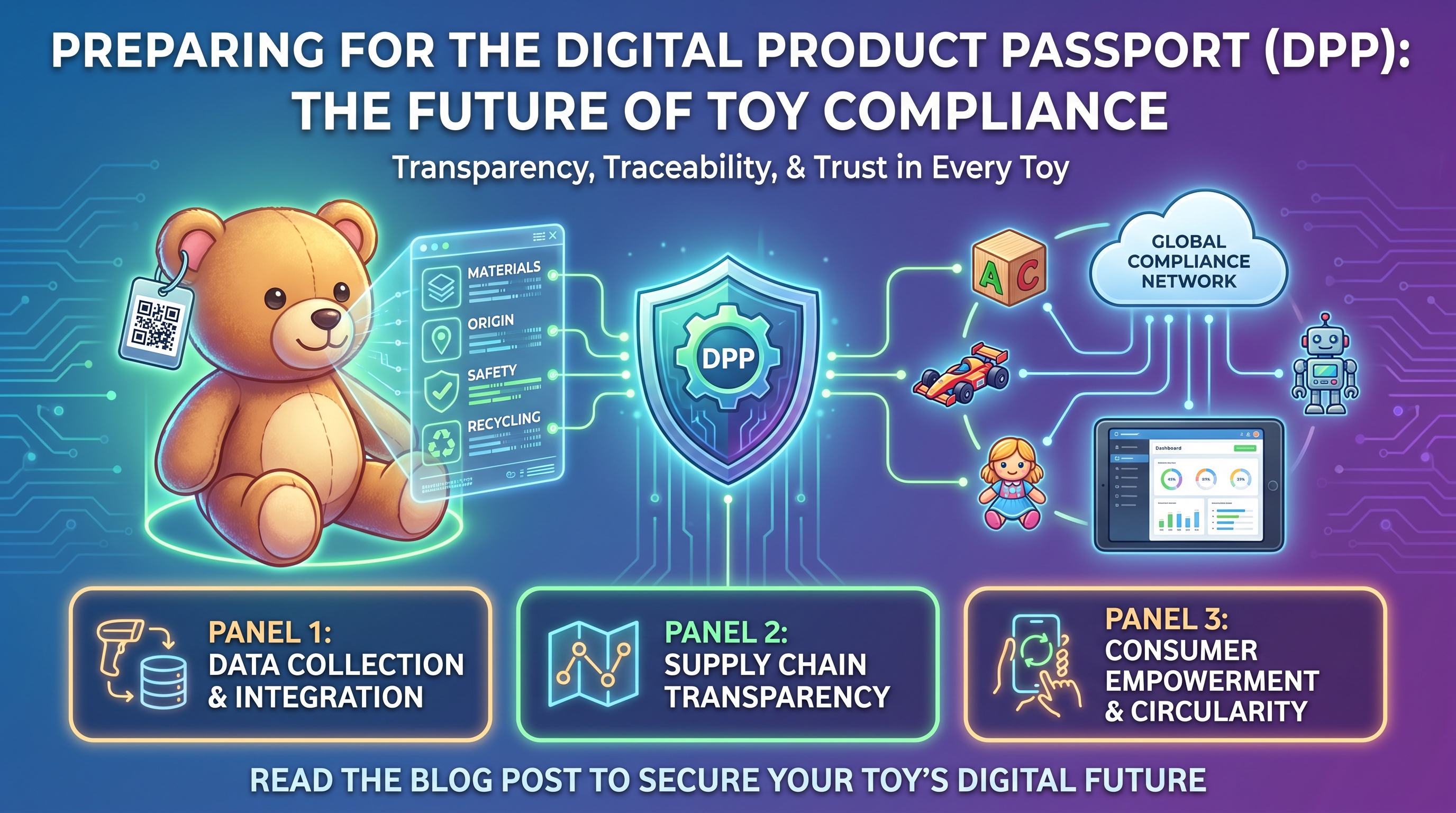
The Digital Product Passport is a mandatory digital record that entirely replaces the paper Declaration of Conformity. Instead of a PDF filed away in a cabinet, the DPP links each physical toy to a secure, cloud-hosted dataset through a data carrier — almost always a QR code sewn into the toy's label or printed on its retail packaging.
That code has to be visible to shoppers before they buy, and stay accessible to customs agents and market surveillance authorities long after. Scan it, and you get the product's full compliance history: not a marketing page, but a structured, legally binding record that manufacturers must keep accurate and available for 10 years after the toy reaches the market.
What Will the QR Code Reveal?
Regulation 2025/2509 demands far more granularity than the old DoC. Wholesale buyers should confirm their manufacturing partners can track and provide:
Verified identification — the product's model number, reference images for visual traceability, and the correct customs commodity codes.
Economic operator data — the registered name, address, and unique identifier of the manufacturer, the importer, and the EU-based authorized representative.
Chemical and conformity data — references to the harmonized standards applied (the EN 71 series), plus disclosures on restricted substances such as PFAS, endocrine disruptors, and allergenic fragrances.
Traceability data — fabric composition and other sustainability details, as the related Ecodesign for Sustainable Products Regulation (ESPR) rules are finalized.
Manufacturers must also back up every passport with an authorized digital product passport service provider, so the record survives even if a factory's own systems go down.
Why Is the EU Making This Mandatory?
The goal is enforcement that doesn't depend on trust. Checking paper compliance at the border today is slow, manual, and easy to fake. A digital passport lets customs authorities scan and verify a shipment automatically, with no wet-ink signatures and no waiting on a supplier to send over documents.
If a QR code is missing, broken, or points to incomplete data, the shipment gets flagged and held. The system also spreads liability: regulators can trace a faulty toy back through the importer, the fulfillment provider, and the factory within seconds — a shift that makes every link in the supply chain answerable, not just the brand on the box.
Key Dates to Know
January 1, 2026 — Regulation (EU) 2025/2509 enters into force. Several articles already apply, starting the transition period.
2026–2028 — CEN/CENELEC finalizes the technical IT standards (the EN 18216 series) that govern how data carriers and the EU registry exchange information.
August 1, 2030 — Hard deadline. Every toy placed on the EU market must carry an active, scannable Digital Product Passport.
How We're Staying Ahead of the Curve
Generating accurate passport data isn't possible without real control over the supply chain — auditing Tier 2 fabric mills, tracking batch-specific lab results, knowing exactly where every component came from. That level of visibility is out of reach for a factory that relies on fragmented, untraceable subcontractors.
As a direct manufacturer, we're already aligning our production documentation with these digital standards: auditing raw materials at the source and working directly with accredited testing labs, so the data behind your future DPPs is clean, traceable, and ready to scan from day one. When the EU switches on digital customs enforcement, our wholesale partners won't experience a single delay.
Have questions about how the DPP affects your next order or an existing product line? Our compliance and sourcing team is happy to walk through the specifics with you.