A few years ago, "eco-friendly" was something you mentioned if a buyer asked. Now it's often the first question in an RFQ, right after price and MOQ — and increasingly, buyers want documentation, not adjectives.
In this article:
- Why buyers are pushing harder
- What "sustainable" actually means on the factory floor
- The certifications buyers actually ask for
- It goes beyond the fabric itself
- Why this matters for exporters
Why buyers are pushing harder
The plush toy market is on track to grow from roughly $5.5 billion in 2026 to over $8 billion by 2035, and industry estimates suggest more than half of manufacturers already use recycled fabrics or eco-friendly stuffing somewhere in production. Major retail channels across the US and EU now require proof of recycled content and chemical safety compliance before a product reaches their shelves. A vague "we're eco-friendly" no longer clears that bar — traceable, certified materials do, and buyers are getting sharper at telling the difference.
What "sustainable" actually means on the factory floor
For most manufacturers, it comes down to three material decisions:
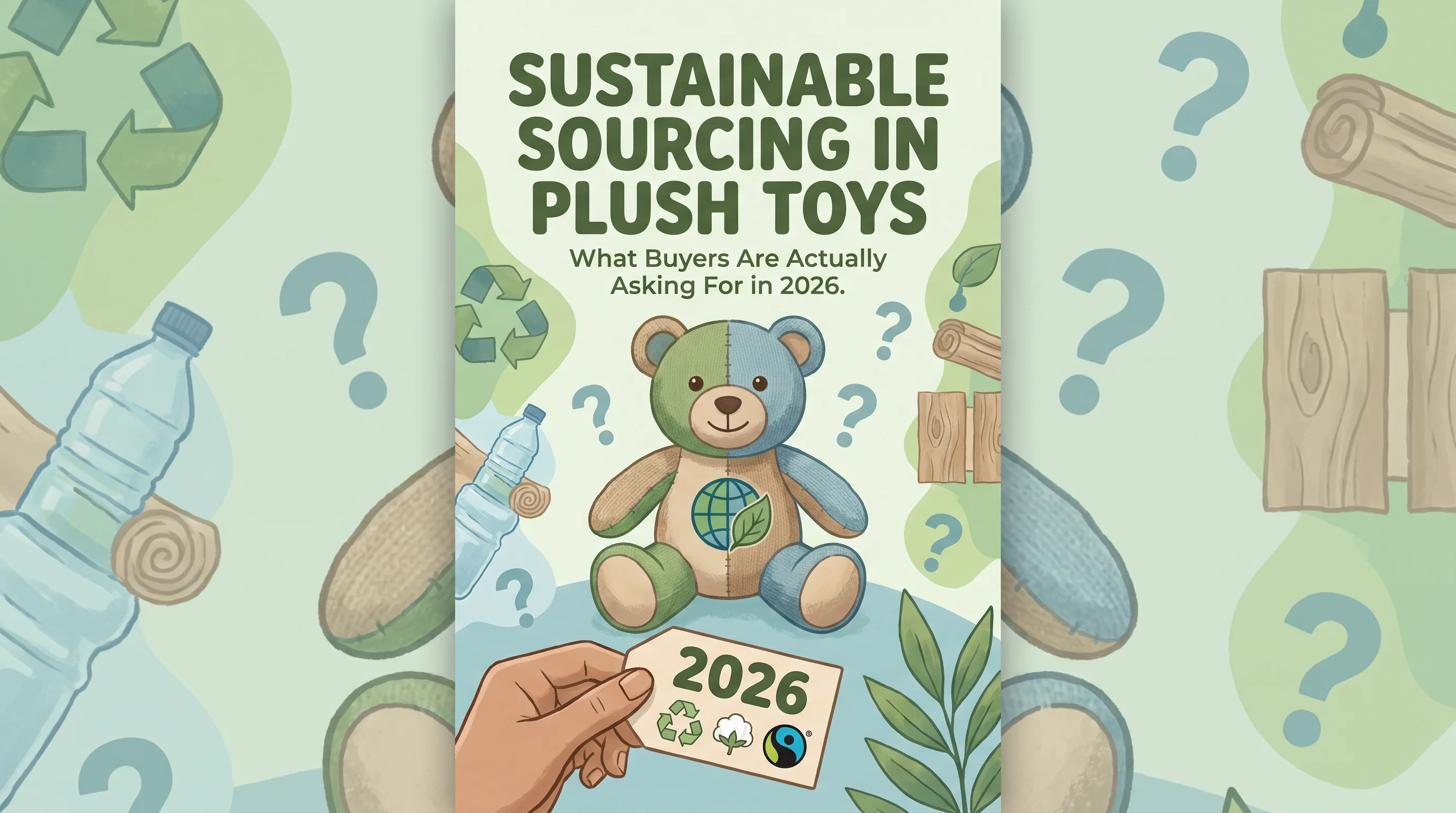
Fabric: Classic Minky and short-pile plush remain the industry standard for hand-feel, but recycled-content fabric — spun from post-consumer polyester — is becoming a credible substitute with a much stronger environmental story, at a comparable feel and cost.
Stuffing: PP cotton (polypropylene fiberfill) is still the default filler across the industry, but recycled PET (rPET) fiberfill, made from recycled plastic bottles, now performs essentially the same and is what sustainability-focused buyers are specifically requesting by name.
Natural fibers: Organic cotton and bamboo-derived fabric are showing up more in premium and baby-safe lines, where biodegradability and skin-contact safety both matter to the buyer.
The certifications buyers actually ask for
Good materials only get you halfway — documentation closes the deal. Three certifications come up constantly in buyer conversations:
GRS (Global Recycled Standard): Verifies the actual recycled content in fabric or fiberfill. It typically adds 5–10% to material cost, but it's what turns "recycled" from a marketing claim into a defensible one.
OEKO-TEX Standard 100: Tests finished textiles for harmful substances — formaldehyde, heavy metals, restricted dyes — and is close to a hard requirement for anything sold into baby or toddler categories.
REACH, CPSIA/ASTM F963, and EN 71: The EU and US regulatory baselines. Not optional, and increasingly buyers want to see the lab reports before they'll even request a sample.
It goes beyond the fabric itself
Buyers are starting to ask what happens before the fabric even reaches the cutting table — dye-house water use, factory energy sourcing, waste handling, and even the packaging the toy ships in. There's no single certification covering all of this yet the way GRS covers materials, but it's clearly where the conversation is heading, especially with EU buyers who are used to stricter environmental reporting at home.
Why this matters for exporters
This isn't only a compliance checkbox — it's becoming a genuine competitive edge. A supplier who can hand over a GRS certificate, an OEKO-TEX report, and a clear material breakdown wins the conversation faster than one who can only say "we're eco-friendly." When buyers are comparing several factories side by side on similar pricing, that paperwork is often what tips the decision.
A quick checklist for buyers evaluating a plush supplier's sustainability claims:
Ask for the GRS or OEKO-TEX certificate directly, not just a logo on a catalog.
Confirm which specific materials in your product are certified — not just "the factory" in general.
Request the compliance lab report (REACH / CPSIA / EN 71) alongside the sustainability documentation, not as an afterthought.
If you're sourcing plush toys and want to talk through what realistic sustainable material options look like for your product line, I'm happy to compare notes — feel free to comment or reach out directly.